Humanocracy
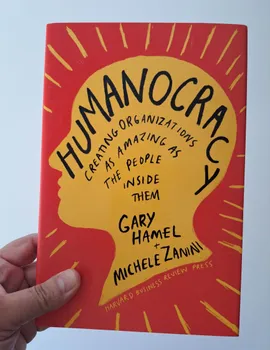
Humanocracy by Gary Hamel and Michele Zanini is a major work in modern organizational design. Its core argument is simple but radical: bureaucracy is the biggest barrier to human potential, and organizations must be redesigned so people—not rules, hierarchy, or compliance—are the primary engine of performance.
What the book is about
Section titled “What the book is about”- The bureaucratic crisis — Employees spend huge amounts of time on administrative chores, approvals, and political navigation. A Harvard Business Review survey cited in the book shows employees lose 27% of their time to bureaucratic tasks.
- The moral argument — Bureaucracy is not just inefficient; it’s dehumanizing. It suppresses dignity, creativity, and meaning at work.
- Humanocracy principles — Openness, transparency, autonomy, ownership, and purpose-driven work. These principles mirror ideas from agile, self-management, and modern leadership frameworks.
- Case studies — Companies like Nucor and Haier demonstrate that decentralized, empowered, self-organizing teams outperform traditional hierarchical structures.
- The Bureaucratic Mass Index (BMI) — A diagnostic tool showing how much bureaucracy costs organizations in productivity and innovation.
- The “ignorance tax” — Bureaucracy creates bottlenecks where decisions are made far from customers and reality, slowing adaptation and innovation.
Core takeaway
Section titled “Core takeaway”Humanocracy argues that most companies are built for control, not contribution. Bureaucracy—layers of approval, rigid roles, standardized processes—creates what Hamel and Zanini call an organizational handicap: people become less adaptive than the challenges they face. The book proposes replacing bureaucracy with human-centric systems that unleash creativity, autonomy, and ownership.
Why it matters
Section titled “Why it matters”Humanocracy is one of the most influential critiques of traditional management since Reinventing Organizations or The Open Organization. It provides:
- A data-backed case for dismantling bureaucracy.
- A practical framework for building human-centric companies.
- A vision of organizations where people have autonomy, purpose, and room to innovate.
- A challenge to leaders: stop treating people as resources and start treating them as creators.
Key concepts
Section titled “Key concepts”- Bureaucratic Mass Index
- Nucor case study
- Haier’s RenDanHeYi model
- Humanocracy principles
- How to build a human-centric organization