The Art of Action
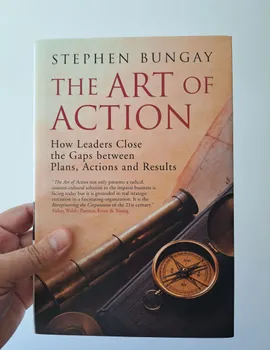
The Art of Action by Stephen Bungay is one of the most influential modern strategy‑execution books. The core idea is straightforward but powerful: organizations don’t fail because of bad strategy — they fail because of the gaps between plans, actions, and results. Bungay shows how to close those gaps using principles derived from 19th‑century Prussian military doctrine (Auftragstaktik / mission command).
What the book is about
Section titled “What the book is about”The three execution gaps (central to Bungay’s framework)
Section titled “The three execution gaps (central to Bungay’s framework)”- Knowledge Gap — The difference between what leaders wish they knew and what they actually know. Plans are always imperfect.
- Alignment Gap — The difference between what leaders want people to do and what people actually do. Miscommunication, unclear priorities, and over‑specification create drift.
- Effects Gap — The difference between what leaders expect their actions to achieve and what actually happens. Outcomes rarely match predictions.
These gaps are created by friction, a concept Bungay borrows from Clausewitz — the unavoidable messiness of real‑world execution.
Key principles Bungay proposes
Section titled “Key principles Bungay proposes”- Strategy as Intent — Don’t over‑plan. Define the outcome you want and why it matters.
- Briefing & Backbriefing — Leaders explain intent; teams explain how they will achieve it. This surfaces misalignment early.
- Directed Opportunism — Give teams freedom to adapt while staying aligned with strategic intent.
- The Right People — Mission command only works if people are capable of autonomous decision‑making.
Core takeaway
Section titled “Core takeaway”The book argues that leaders should communicate intent, not instructions, and create an environment where teams can act autonomously within clear boundaries. This reduces friction, accelerates decision‑making, and aligns execution with strategy.
Why it matters
Section titled “Why it matters”- It explains why organizations drown in activity but starve for results.
- It provides a practical execution system, not just theory.
- It’s one of the clearest bridges between military doctrine and modern business leadership.