DevOps for the Modern Enterprise
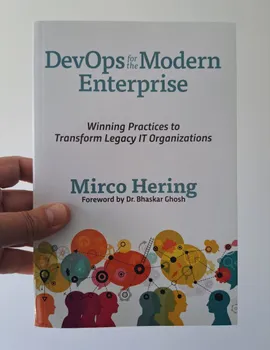
DevOps for the Modern Enterprise: Winning Practices to Transform Legacy IT Organizations by Mirco Hering is a well‑known, award‑winning book in the DevOps/Agile/enterprise‑modernization space. It was published in 2018 by IT Revolution and won the DevOps Dozen Best DevOps Book award that year.
What the book is about
Section titled “What the book is about”1. Transformation roadmap for legacy IT
Section titled “1. Transformation roadmap for legacy IT”Hering explains why traditional, manufacturing‑inspired IT processes fail in modern digital environments and provides a step‑by‑step transformation model:
- How to evolve organizational structures
- How to reduce batch sizes and transaction costs
- How to adopt multispeed IT while transitioning to modern architectures
- Transformation roadmap
2. People, culture, and empowerment
Section titled “2. People, culture, and empowerment”A major theme: DevOps is not tooling-first — it is people-first.
Hering focuses on:
- Empowering teams
- Moving from “managing resources” to managing people
- Building collaboration across historically siloed groups
- DevOps culture
3. Team design and organizational structure
Section titled “3. Team design and organizational structure”The book provides concrete patterns for:
- Cross-functional Agile teams
- Quality engineering instead of traditional testing roles
- Governance checkpoints that support flow rather than hinder it
- Agile team structures
4. Technology modernization
Section titled “4. Technology modernization”Hering covers:
- Application architecture evolution
- Microservices adoption
- Cloud transformation
- Managing COTS/ERP systems in a DevOps context (a rare and valuable angle)
- Microservices architecture
5. Working with vendors and partners
Section titled “5. Working with vendors and partners”A unique strength of the book is its guidance for enterprises heavily invested in outsourcing:
- How to collaborate effectively with large vendors
- How to align incentives
- How to evaluate cost vs. daily rate trade-offs
- Vendor management in DevOps
Core takeaway
Section titled “Core takeaway”The book is a pragmatic, experience‑based roadmap for modernizing legacy IT organizations using Agile, Lean, and DevOps principles — with a strong emphasis on cultural change, team empowerment, and practical transformation patterns.
Why it matters
Section titled “Why it matters”Among DevOps transformation books, Hering’s stands out because it is deeply practical, grounded in real enterprise experience, and specifically tailored to legacy IT environments — the hardest context for DevOps.
Reviewers consistently praise its pragmatic “how” rather than abstract “what” approach.