Thinking in Systems
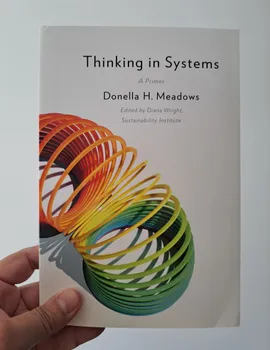
Thinking in Systems by Donella H. Meadows is one of the foundational texts in modern systems thinking. It was published posthumously in 2008 and has become a core reference across sustainability, organizational design, policy, and complexity science.
What the book is about
Section titled “What the book is about”- Systems thinking — shifting from event-level explanations to understanding underlying structures.
- Feedback loops — reinforcing loops drive growth; balancing loops stabilize systems. These loops create non‑linear, counterintuitive behavior.
- Stocks and flows — systems accumulate resources (stocks) and change through flows; delays between them often cause oscillations or instability.
- Leverage points — places where small interventions can produce large, lasting change. Meadows famously ranks these from least to most effective.
- Mental models — the assumptions and beliefs shaping how systems are designed and operated. Changing mental models is one of the highest leverage points.
Core takeaway
Section titled “Core takeaway”The book introduces systems thinking as a way to understand why complex problems behave the way they do. Meadows argues that events (market crashes, team conflicts, ecological crises) are surface symptoms of deeper system structures — feedback loops, delays, stocks, flows, and information pathways. Structure creates behavior, and systems generate their own patterns.
Why it matters
Section titled “Why it matters”Meadows’ work is influential because it provides a practical lens for navigating complexity. Instead of reacting to symptoms, systems thinking helps identify structural causes — crucial for leaders, policymakers, engineers, and anyone dealing with persistent, recurring problems.