Site Reliability Engineering
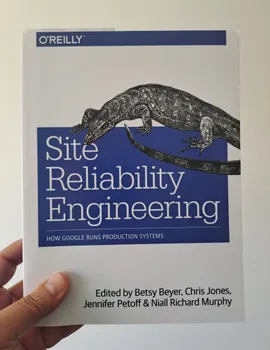
Site Reliability Engineering: How Google Runs Production Systems is one of the foundational texts in modern reliability engineering.
What the book is about and why it matters
Section titled “What the book is about and why it matters”The book formalizes reliability as an engineering discipline, not an operational afterthought. It shows how Google ties reliability targets to product velocity using error budgets, and how SRE teams use automation to cap manual operations work (“toil”) so engineers can focus on improvements.
Key concepts
Section titled “Key concepts”- SLIs/SLOs/SLAs — measurable indicators, internal reliability targets, and external commitments.
- Error budgets — the mechanism that balances reliability with feature velocity.
- Toil reduction — eliminating repetitive manual work through automation.
- Blameless postmortems — learning from incidents without blame.
- Monitoring & the four golden signals — latency, traffic, errors, saturation.
- Incident response — structured, engineering‑driven operations.
- Risk acceptance — reliability is not “zero downtime”; it’s an economic trade‑off.
Core takeaway
Section titled “Core takeaway”It’s a 552‑page collection of essays by Google’s SREs explaining how they run large‑scale production systems using engineering principles rather than traditional operations. Core ideas include SLIs/SLOs/SLAs, error budgets, toil reduction, automation, monitoring/observability, on‑call practices, and blameless postmortems.
Why it’s influential
Section titled “Why it’s influential”The book reshaped how modern companies think about operations by merging software engineering with production reliability. It directly influenced DevOps practices such as automation, observability, and continuous delivery.