Escape Velocity
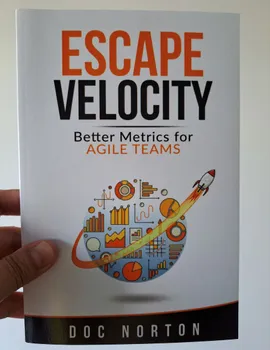
Escape Velocity: Better Metrics for Agile Teams by Doc Norton is a well‑known book in the Agile community, and it directly challenges the widespread misuse of velocity as a metric. The book argues that velocity is often a lagging indicator, easily gamed, and frequently harmful when used for commitments or performance evaluation. Instead, Norton proposes a richer, healthier set of metrics focused on flow, predictability, customer value, and team well‑being.
What the book is about
Section titled “What the book is about”- Velocity is not a reliable forecasting tool — Norton explains why velocity fluctuates, why it cannot stabilize in complex systems, and why comparing velocity across teams is meaningless.
- Common velocity anti‑patterns — such as pressuring teams to “increase velocity,” comparing teams, measuring individuals, or using velocity as a proxy for productivity.
- Better alternatives — including lead time, cycle time, flow efficiency, escaped defects, customer satisfaction, and even team joy as more meaningful indicators of delivery health.
- Forecasting techniques — Norton introduces methods that outperform velocity‑based forecasting, such as probabilistic forecasting using flow‑based data.
- Metric pitfalls — Goodhart’s Law, Hawthorne Effect, perverse incentives, and how poorly designed metrics distort behavior.
Why it matters
Section titled “Why it matters”For Agile practitioners — especially Scrum teams — this book is a corrective to the widespread but misguided belief that velocity is a measure of productivity or team performance. It aligns strongly with modern Agile thinking (Kanban, flow‑based metrics, systems thinking) and is frequently recommended by coaches who want teams to focus on outcomes, not story‑point throughput.