Drift into Failure
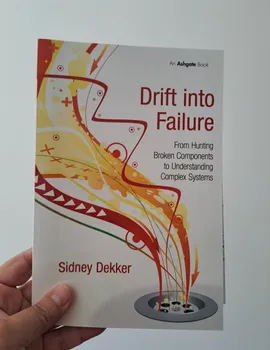
Drift into Failure by Sidney Dekker is a well‑known book in safety science and complex systems thinking. The core idea is that major accidents rarely come from a single broken part or one bad decision; instead, they emerge gradually from normal, locally rational decisions made within complex, tightly coupled systems.
What the book is about
Section titled “What the book is about”Dekker argues that organizations often “drift” into failure because:
- People make reasonable decisions in their local context, but those decisions accumulate into systemic vulnerability.
- Complex systems behave in non‑linear ways, so traditional Newtonian, reductionist accident analysis (looking for one broken component or one culprit) misses the real causes.
- Interactions, interdependencies, and competitive pressures multiply risk in ways organizations fail to see.
- Accidents emerge from normal operations, not from extraordinary mistakes.
Dekker uses examples like Deepwater Horizon, Space Shuttle Columbia, and sub‑prime lending collapse to show how everyday decisions can slowly push systems toward tipping points.
Key concepts
Section titled “Key concepts”- Drift — A gradual, unnoticed movement toward higher risk.
- Local rationality — People make the best decisions they can with the information and pressures they have.
- Unruly technology — Systems behave unpredictably when tightly coupled.
- Diversity — Multiple perspectives help resist drift and challenge groupthink.
- New accountability — Instead of hunting for culprits, understand the systemic conditions that shaped decisions.
Why it matters
Section titled “Why it matters”For anyone working in safety, engineering, operations, risk, or organizational leadership, Dekker’s work is foundational. It shifts the focus from blaming individuals to understanding systemic complexity, which aligns strongly with modern resilience engineering and safety‑II thinking.