Chaos Engineering
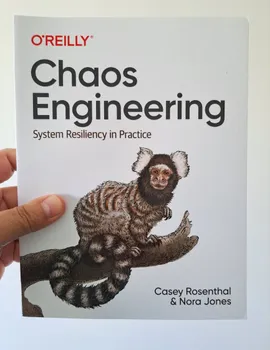
Chaos Engineering: System Resiliency in Practice by Casey Rosenthal and Nora Jones is one of the definitive, practitioner‑driven books on modern resilience engineering. It formalizes chaos engineering as a discipline, traces its origins at Netflix, and expands it with case studies from Google, Microsoft, Slack, LinkedIn, and others.
What the book is about
Section titled “What the book is about”- Origins at Netflix — Rosenthal and Jones helped pioneer chaos engineering there.
- Principles of Chaos Engineering — grounding in complexity theory, resilience engineering, and HOP (Human and Organizational Performance).
- Case studies — Google DiRT, Slack’s Disasterpiece Theater, Microsoft’s experiment prioritization, LinkedIn’s member‑centric reliability, Capital One’s adoption journey.
- Human factors — incident analysis, people‑in‑the‑loop, organizational learning.
- Business factors — ROI of chaos engineering, maturity models, continuous verification.
- Practical implementation — designing game days, targeted experiments, automation, and continuous chaos programs.
Core takeaway
Section titled “Core takeaway”It’s a 308‑page O’Reilly book (2020) that teaches how to build confidence in complex distributed systems through hypothesis‑driven, controlled failure experiments. It blends complexity theory, safety science, human factors, and real‑world industry practices.
Why it matters
Section titled “Why it matters”The book argues that complexity in distributed systems cannot be reduced, only navigated. Chaos engineering provides a scientific, empirical method to uncover weaknesses before they become incidents. It’s widely considered the most comprehensive reference in the field, combining theory, practice, and cross‑industry perspectives.