Leading with Emotional Courage
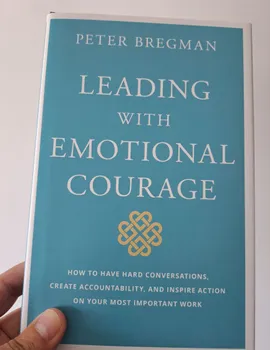
Leading With Emotional Courage by Peter Bregman is a well‑known leadership book, and its core message is strongly supported by multiple reputable summaries and analyses. The book argues that emotional courage—the willingness to feel discomfort, vulnerability, fear, and uncertainty—is the defining trait that separates effective leaders from ineffective ones.
What the book is about
Section titled “What the book is about”The central premise is that leadership is not primarily about knowing the right strategy or technique; it’s about whether you’re willing to feel the difficult emotions required to act on what you know. Bregman frames emotional courage as the ability to:
- Show up with authenticity, even when it’s uncomfortable.
- Speak candidly and have hard conversations without shutting down.
- Create accountability through clear expectations, feedback, and consequences.
- Inspire action by staying grounded and connected to purpose.
Key themes and insights
Section titled “Key themes and insights”- Vulnerability as strength — Pretending to be invulnerable blocks trust; showing imperfections builds connection.
- Facing fear directly — Bregman offers step‑by‑step methods for identifying and confronting fear through reflection and awareness.
- Self‑compassion — Treating yourself with kindness increases resilience and reduces defensive reactions.
- Accountability systems — A five‑step method ensures clarity, measurable milestones, feedback, and consequences.
- Emotional steadiness — Leaders must stay grounded in uncertainty and opposition.
Why it matters
Section titled “Why it matters”Bregman’s argument is simple but powerful:
If you are willing to feel everything, you can do anything.
Emotional courage is the bridge between leadership theory and leadership practice. It’s what enables leaders to cut through noise, politics, and fear to actually get things done.