Start With Why
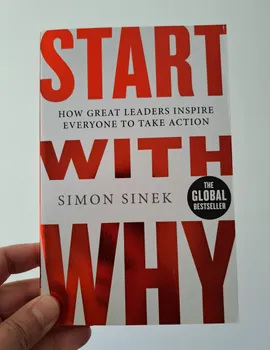
Start With Why: How Great Leaders Inspire Everyone to Take Action by Simon Sinek is one of the most influential modern leadership and business books. The central idea is that inspiring leaders and organisations begin by communicating why they exist, rather than focusing first on what they do or how they do it.
What the book is about
Section titled “What the book is about”The book explores why some leaders and organisations generate extraordinary loyalty, innovation, and long-term success while others struggle to sustain it.
Sinek studies examples such as:
- Martin Luther King Jr.
- Steve Jobs
- The Wright Brothers
- Apple
He argues that their success was not primarily due to superior resources, intelligence, or technology. Instead, they were able to articulate a clear purpose that attracted people who shared their beliefs.
The book covers themes such as:
1. Leadership Through Inspiration
Section titled “1. Leadership Through Inspiration”There are two ways to influence people:
- Manipulation
- Inspiration
Manipulation can work temporarily through:
- Discounts
- Fear
- Pressure
- Promotions
Inspiration creates lasting commitment because people genuinely believe in the mission.
2. Building Trust and Loyalty
Section titled “2. Building Trust and Loyalty”Customers, employees, and followers become loyal when they believe in the same purpose as the leader or organisation.
People are attracted to organisations that reflect their own values.
3. Purpose-Driven Organisations
Section titled “3. Purpose-Driven Organisations”Companies with a strong “why” often:
- Attract better talent
- Retain loyal customers
- Innovate more effectively
- Survive change more successfully
4. Consistency Between Purpose and Action
Section titled “4. Consistency Between Purpose and Action”Saying the right “why” is not enough.
A leader’s actions, decisions, products, and culture must consistently reinforce that purpose.
Core takeaway
Section titled “Core takeaway”The book’s most important lesson is:
People do not truly buy into what you do; they buy into why you do it.
According to Sinek, exceptional leaders inspire action because they are driven by a clear purpose, belief, or cause. They communicate this purpose first, which creates emotional connection, trust, and loyalty.
The Golden Circle
Section titled “The Golden Circle”Sinek introduces a framework called the Golden Circle:
WHY↑HOW↑WHAT- WHY = Purpose, cause, belief. Why does the organisation exist?
- HOW = Process, principles, differentiators. How do you fulfil the purpose?
- WHAT = Products, services, actions. What do you actually do?
Most people and companies communicate from the outside in:
What → How → Why
Great leaders communicate from the inside out:
Why → How → What
Sinek argues that this order is far more inspiring because people connect emotionally to purpose before they connect logically to products or services.
Example: Apple
Section titled “Example: Apple”Sinek famously uses Apple as an example.
Most companies say:
We make great computers. They are beautifully designed and easy to use.
Apple effectively communicates:
We believe in challenging the status quo and thinking differently. (WHY)
We create beautifully designed, user-friendly products. (HOW)
We happen to make great computers. (WHAT)
The message feels more compelling because it starts with a belief rather than a product.
Why it matters
Section titled “Why it matters”For Individuals
Section titled “For Individuals”Many people focus on:
- What job they have
- What skills they possess
- What goals they want
The book encourages asking:
Why am I doing this?
When people understand their purpose, they often make clearer career decisions and feel more motivated.
For Leaders
Section titled “For Leaders”Leaders frequently communicate goals, metrics, and tasks but fail to explain the reason behind them.
The book argues that employees are more engaged when they understand:
- The mission
- The impact
- The bigger picture
For Businesses
Section titled “For Businesses”In competitive markets, products and features can be copied.
Purpose is harder to copy.
A strong “why”:
- Differentiates a company
- Builds brand loyalty
- Creates emotional connection
For Teams
Section titled “For Teams”Teams become more aligned when everyone understands the underlying purpose instead of merely completing tasks.
People stop asking:
What do I need to do?
And start asking:
How can I help achieve our mission?
Practical Application
Section titled “Practical Application”If you apply the book’s ideas, start by answering these questions:
Why does this organisation, project, or effort exist?
What principles or methods make it unique?
What products, services, or outputs does it create?
For example, if you’re building AI and automation solutions:
- WHY: Help people work more effectively and eliminate repetitive work.
- HOW: Use AI, automation, and modern engineering practices.
- WHAT: Build agents, workflows, APIs, and software solutions.
The clearer the WHY, the easier it becomes to make decisions, prioritise work, and inspire others.
In summary:
The central message of Start With Why is that the most influential leaders and organisations succeed because they begin with a clear sense of purpose and communicate that purpose before explaining what they do or how they do it.