The Lean Startup
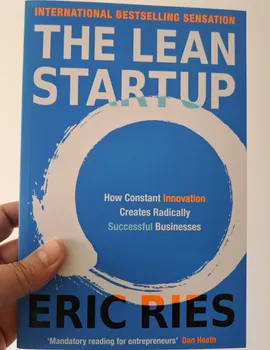
The Lean Startup by Eric Ries (published in 2011) is one of the most influential books in modern entrepreneurship. It introduces a scientific, iterative approach to building products under conditions of extreme uncertainty, centered on validated learning, rapid experimentation, and the Build‑Measure‑Learn loop.
What the book is about
Section titled “What the book is about”- Minimum Viable Product — the smallest version of a product that enables maximum learning with minimal effort.
- Build‑Measure‑Learn — the feedback loop at the heart of the method: build something small, measure customer response, learn what to do next.
- Validated Learning — using data from real experiments to confirm or reject assumptions.
- Innovation Accounting — a new way to measure progress in uncertain environments, focusing on actionable metrics rather than vanity metrics.
- Pivot or Persevere — deciding whether to change direction or continue based on evidence.
Core takeaway
Section titled “Core takeaway”Startups should treat every product idea as a hypothesis, test it quickly with real customers, measure results, and learn whether to pivot or persevere.
Why it matters
Section titled “Why it matters”- It replaces long business plans with rapid experimentation.
- It reduces waste by focusing only on what customers actually value.
- It provides a repeatable scientific method for innovation.
- It has shaped modern product development, influencing Agile, Lean, DevOps, and corporate innovation programs.
High‑level structure
Section titled “High‑level structure”The book is organized into three parts:
- Vision — defining the startup, the entrepreneur, and the importance of learning.
- Steer — MVPs, Build‑Measure‑Learn, validated learning, innovation accounting.
- Accelerate — growth engines, pivots, small batches, continuous improvement.