Project to Product
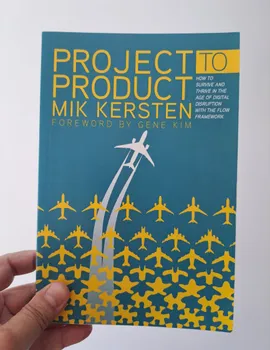
Project to Product by Mik Kersten is a well‑known and influential book in the digital transformation and software delivery space. The core idea is that organizations must shift from project-oriented management to product-centric value streams, using Kersten’s Flow Framework as the bridge.
What the book is about
Section titled “What the book is about”The Problem: Project Thinking Is Obsolete
Section titled “The Problem: Project Thinking Is Obsolete”- Traditional project models come from the Age of Mass Production and don’t fit modern software delivery.
- Companies like Nokia struggled not because they didn’t try to transform, but because they measured the wrong things (e.g., Agile adoption instead of value flow).
- Kersten shows how project-based structures create silos, slow feedback loops, and misalignment between business and IT.
The Flow Framework
Section titled “The Flow Framework”Kersten’s central contribution is the Flow Framework, which provides:
- Flow Items: Features, Defects, Risks, Debts
- Flow Metrics: Flow Velocity, Flow Efficiency, Flow Time, Flow Load
These metrics allow leaders to see bottlenecks, measure value delivery, and align software work with business outcomes.
Value Stream Networks
Section titled “Value Stream Networks”Kersten explains how organizations must evolve from disconnected tools and teams to value stream networks — the software equivalent of modern manufacturing lines.
The Age of Software
Section titled “The Age of Software”Using Carlota Perez’s theory of technological revolutions, Kersten argues we are at a “turning point” where companies must master software delivery or become obsolete.
Core takeaway
Section titled “Core takeaway”The book argues that companies fail at digital transformation because they manage software like projects instead of continuous product value streams, and they lack the metrics needed to connect business strategy to software delivery. Kersten introduces the Flow Framework to solve this gap.
Why it matters
Section titled “Why it matters”- It provides a quantitative, business-aligned way to measure software delivery.
- It bridges the gap between executives and technology leaders.
- It’s widely cited in Agile, DevOps, and Value Stream Management communities.
- Leaders like Dean Leffingwell and Fin Goulding praise it as essential reading for modern enterprises.